Chaser Bin Size Guide: Matching Bin Capacity to Your Header and Operation
Getting your chaser bin sizes wrong can quickly become a problem. Either your header sits idle waiting on a bin that's too small, or you're towing around excess capacity that never gets used. This chaser bin capacity guide sets out what actually drives the right size for your header output and paddock-to-truck distance, covering the practical, mechanical and cost factors that should shape the decision, so it's based on your operation rather than guesswork.
Key Takeaways
- Bin capacity should be matched to your header's grain tank and hourly output, not selected on a "bigger is better" basis.
- Undersized bins increase trips and header stoppages. Oversized bins carry wasted payload capacity and unnecessary axle wear.
- Distance from paddock to truck or silo, crop type, and yield all influence the ideal size.
- Mid-range 20–25 tonne bins suit most single-header NSW broadacre setups; larger multi-header operations often require 30 tonnes or more.
Why Chaser Bin Sizes Matter More Than Expected
A chaser bin's function is to keep the header cutting. Every minute a header spends waiting on an undersized bin to shuttle back and forth is a minute lost to harvesting, and that lost time compounds over a season rather than a single day.
GRDC research puts combined harvester and chaser bin running costs at roughly $500–$800 an hour once depreciation, fuel, repairs and labour are factored in, and notes that slowing header pace by even 10% to manage grain losses can add $5–$8 per hectare to harvest cost.
The same principle applies to chaser bin sizing. A bin that's too small effectively slows the header by requiring more frequent stops, while an oversized bin adds cost without increasing usable output. Correctly sized chaser bin sizes avoid trading harvest capacity for avoidable inefficiency, and the cost of getting it wrong is measured in hours across a harvest, not minutes.
What Determines the Size You Need
There is no single "right" chaser bin size. The ideal capacity depends on a handful of factors specific to your operation, and most operations need to weigh several of these together rather than optimise for just one.
Header Capacity and Output
A larger header filling its tank faster requires a bin able to absorb full loads without constant shuttling. As a general rule, the chaser bin should be able to take at least two to three header tank-fills before it needs to run its own load out, so the header is never left waiting on an empty bin.
Paddock-to-Receival Distance
Longer hauls to the silo or mother bin favour a larger bin, since fewer round trips mean less time away from the header. On properties where the receival point is a long way from the paddock, undersizing the bin is one of the most common and costly mistakes.
Crop Type and Yield
Canola, wheat and barley sit at different bulk densities, so the same litre capacity carries a different tonnage depending on the crop. A bin rated for 25 tonnes of wheat won't necessarily hold 25 tonnes of a lighter crop, and this needs to be factored in when planning for a mixed cropping program.
Towing and Axle Rating
The tractor's towing capacity and the bin's axle rating set a firm ceiling, regardless of the volume otherwise required. It's not enough to size the bin to the header alone. The towing tractor and the bin's undercarriage both need to be rated for the fully loaded weight, not just the empty trailer.
Number of Headers Running
A chaser bin servicing two or three headers requires greater capacity and a faster unload rate than a single-header setup, since it's effectively splitting its time across multiple machines rather than dedicating itself to one.
Soil Compaction and Axle Load Considerations
Bin size isn't only a productivity question; it's a soil health one. Heavier axle loads compact soil to a greater depth, and GRDC research on controlled traffic farming systems notes that machinery damages soil structure in proportion to axle load, with common cropping machinery axle loads of 10 to 12 tonnes causing damage that can persist for years, particularly on sandier soils.
This is a further reason not to default to the largest chaser bin available. An oversized bin loaded to capacity adds axle weight the paddock doesn't need to carry, particularly outside permanent traffic lanes on properties running controlled traffic systems. Sizing the bin to the operation, rather than to a "just in case" maximum, keeps the axle load proportional to what's actually required.
A Practical Chaser Bin Capacity Guide
As a general guide for NSW grain operations:
- 20 tonne: Suited to smaller headers, shorter hauls, or operations where the bin makes frequent short trips to a nearby truck. Also a sensible choice for mixed cropping programs running lighter grains such as canola, where the same physical volume carries less tonnage.
- 25 tonne: The most common all-rounder for a single mid-size header on typical broadacre country, balancing enough buffer capacity against a manageable fully loaded weight for most tractors and single-axle setups.
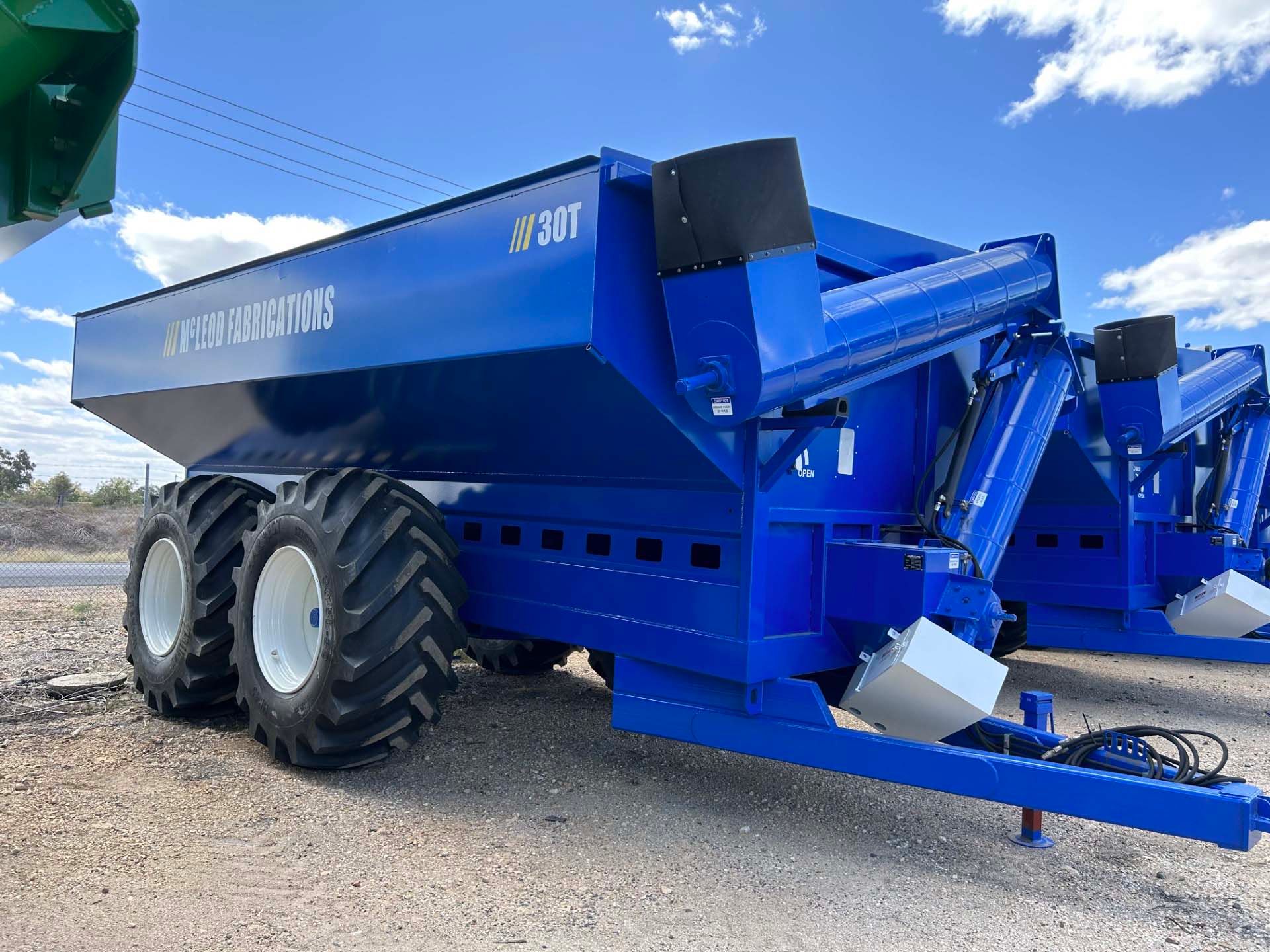
- 30 tonne: Better suited to larger headers, longer paddock-to-truck runs, or where one bin services more than one machine. At this size, dual-axle undercarriage and a higher-rated towing tractor become important considerations rather than optional extras.
Correct sizing also protects equipment. An undersized bin working beyond its capacity wears out augers and hydraulics faster from constant use, while an oversized bin adds unnecessary weight for the tractor to tow and unnecessary compaction risk for the paddock.
Common Mistakes When Sizing a Chaser Bin
A few patterns show up repeatedly when chaser bin sizing goes wrong:
- Sizing to the biggest header on the market, not the header actually in the shed. Chaser bin sizes should match the fleet in use, not a hypothetical future upgrade.
- Ignoring tractor towing capacity. A bin rated for 30 tonnes is no use if the available tractor can't safely tow it fully loaded.
- Overlooking crop density. A bin sized around wheat tonnages may come up short (or run heavier than expected) once canola or pulses are in the rotation.
- Assuming bigger always means more efficient. Beyond a certain point, extra capacity sits unused for most of the season, adding weight, cost, and compaction risk every time the bin is run.
Built for the Paddock, Not Off a Shelf
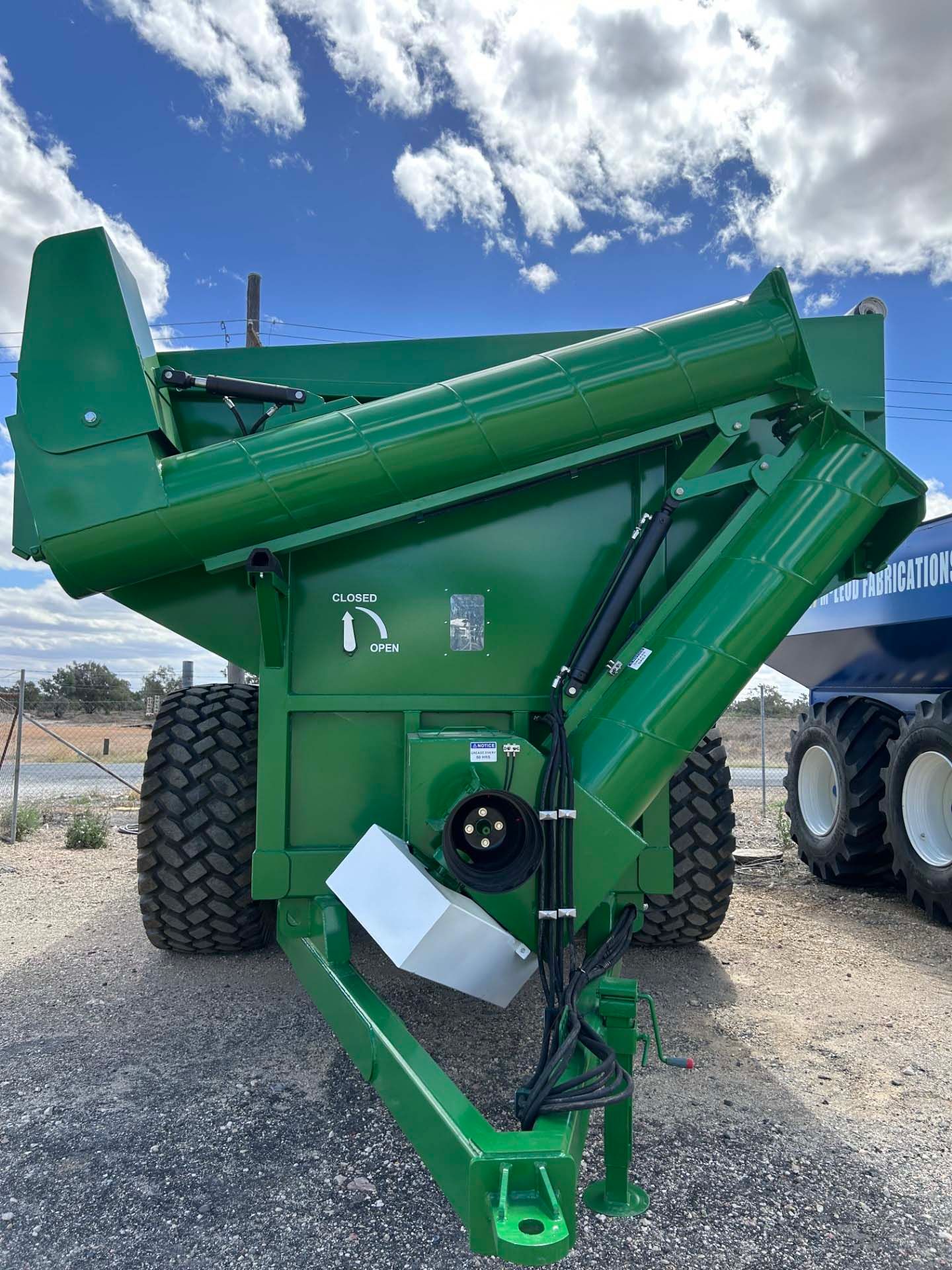
McLeod Fabrications chaser bin range is built in 20T, 25T and 30T models, each heavy-duty, with a 17-inch outload auger, hydraulic grain control and rear ladder access for easy cleaning, so operators aren't left with a generic import that doesn't suit their header, their tractor or their country.
For those planning ahead across the harvest line-up, our skid steer laser grader and drag bucket for sale ranges are also worth considering, and our custom steel fabrication service can adjust any bin to suit a specific tractor or towing set-up.
Located in NSW, we ship Australia-wide with fast turnaround times:
- NSW/ACT:
- VIC:
- QLD:
- SA:
- NT:
- WA:
For guidance on the right size for your operation, contact our team on 0427 281 527 to discuss your header, paddocks and budget before committing. Browse our full range of farm machinery for sale in New South Wales to see what else we build.